
What Does Wild Turkey Taste Like?
Wild turkey tastes like a more robust version of domestic turkey. It does not taste like chicken, which is milder and more neutral.
The flavor is not the surprise. The surprise is how lean the bird is, and that changes how you cook it.
Richer, Earthier, Firmer
Wild turkey meat has a firmer, darker and chewier texture than domestic turkey, as well as a stronger flavor. It also has more grain to it.
The breast meat tastes like a firmer version of domestic breast meat, or like the dark meat of a store bird, according to some cooks.
NWTF describes the flavor of the drumsticks as bold and beefy, strong enough to stand up to a savory barbecue sauce.
Wild turkey meat is often described as earthy, with notes of sweetness and nuttiness. That is a good starting point if you have only eaten grocery store birds.
Why It Tastes Different
Wild turkey is leaner than domestic turkey, so the breasts can easily dry out if overcooked. One nutrition profile puts wild turkey at 109 calories, 25 grams of protein and 1.1 grams of fat per 3.5 ounces.
Some supermarket turkeys are injected with salt water, which adds weight and juiciness. Without injected brine, wild turkey breast may taste more intense.
Diet may play a part in flavor, too. Wild turkeys eat acorns, nuts, seeds, fruits and insects, while a farm bird gets none of that variety.
Season can matter as well. Late summer birds can taste gamier after months of eating insects, while grass and grain eaters taste milder.
About 90% of a wild turkey's diet is plant matter, including seeds and fruits, with the remaining 10% animal matter.
Breast and Legs Are Two Different Cuts
Breasts and tenderloins cook fast and dry out easily, so they suit grilling, frying, sautéing, smoking or grinding. Watch the thermometer closely on these quick-cooking cuts.
Legs and thighs contain connective tissue that needs long cooking to soften.
Wild legs often get a bad reputation because they are cooked like store-bought drumsticks. Thrown on a grill or into a hot oven for a short time, they come out chewy and tough.
NWTF suggests many hunters who dislike drumsticks have never had them cooked properly, and the rule is slow and moist.
How to Cook It
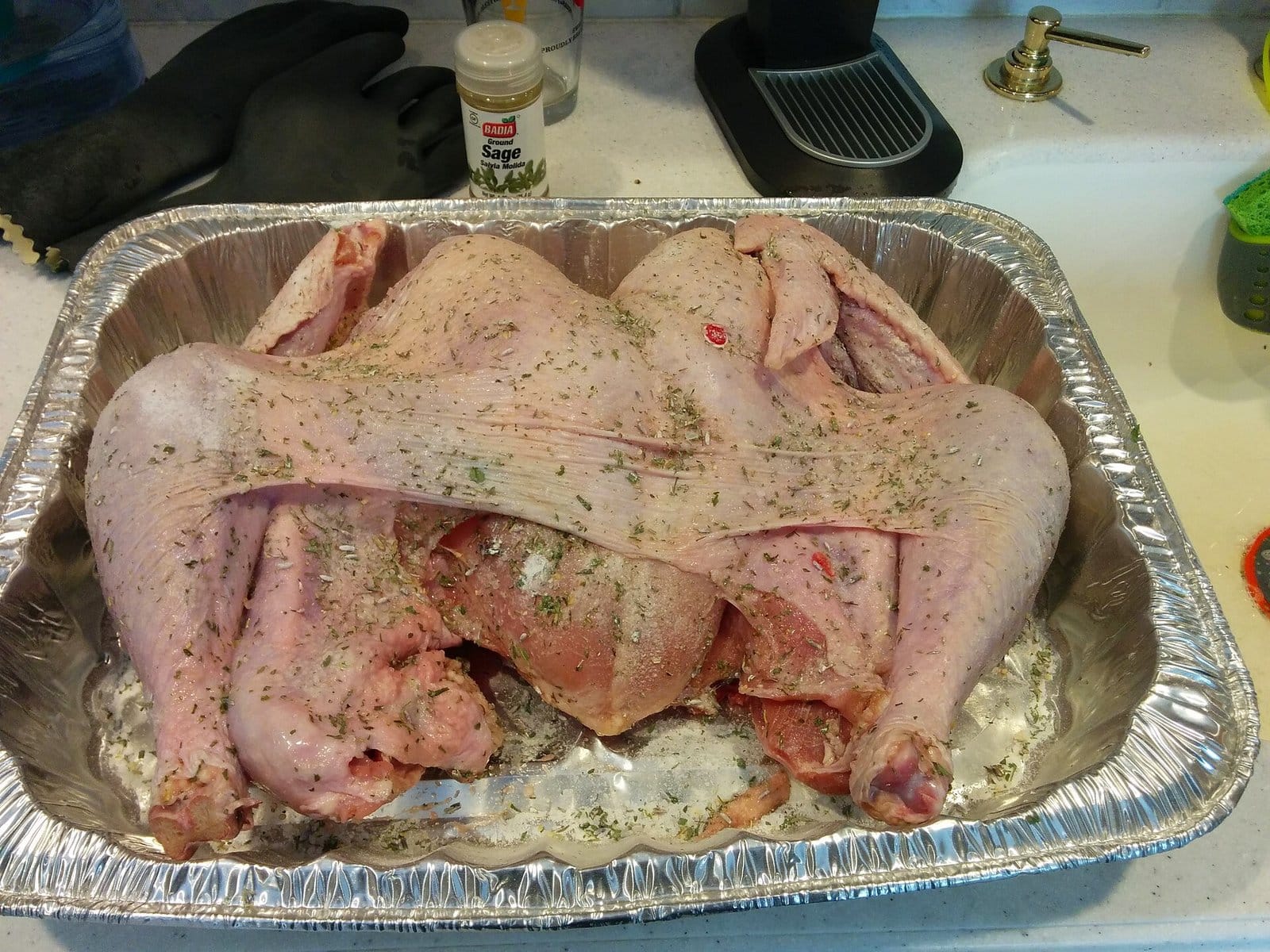

Brine the breast meat. NWTF suggests ¼ cup of sea salt for every quart of water, with turkey brined whole or in parts for two to eight hours.
Brine just before cooking, because freezing brined turkey gives a dry-tasting bird. Freeze the meat plain and brine it on the day you cook it.
Braise the legs. NWTF suggests covering them with beef broth and chopped onions and simmering.
Legs from a young jake may be ready in a few hours, but a mature tom needs six to eight hours.
Let the meat cool, save the broth and strip away the tendons. The shredded meat works well in tacos, soups and barbecue.
Smoke is a good match for the breast. Hickory, cherry and applewood are good choices for wild turkey.
Just keep the temperature in check.
Safe Temperature

Resist the urge to pull that lean meat out of the oven early.
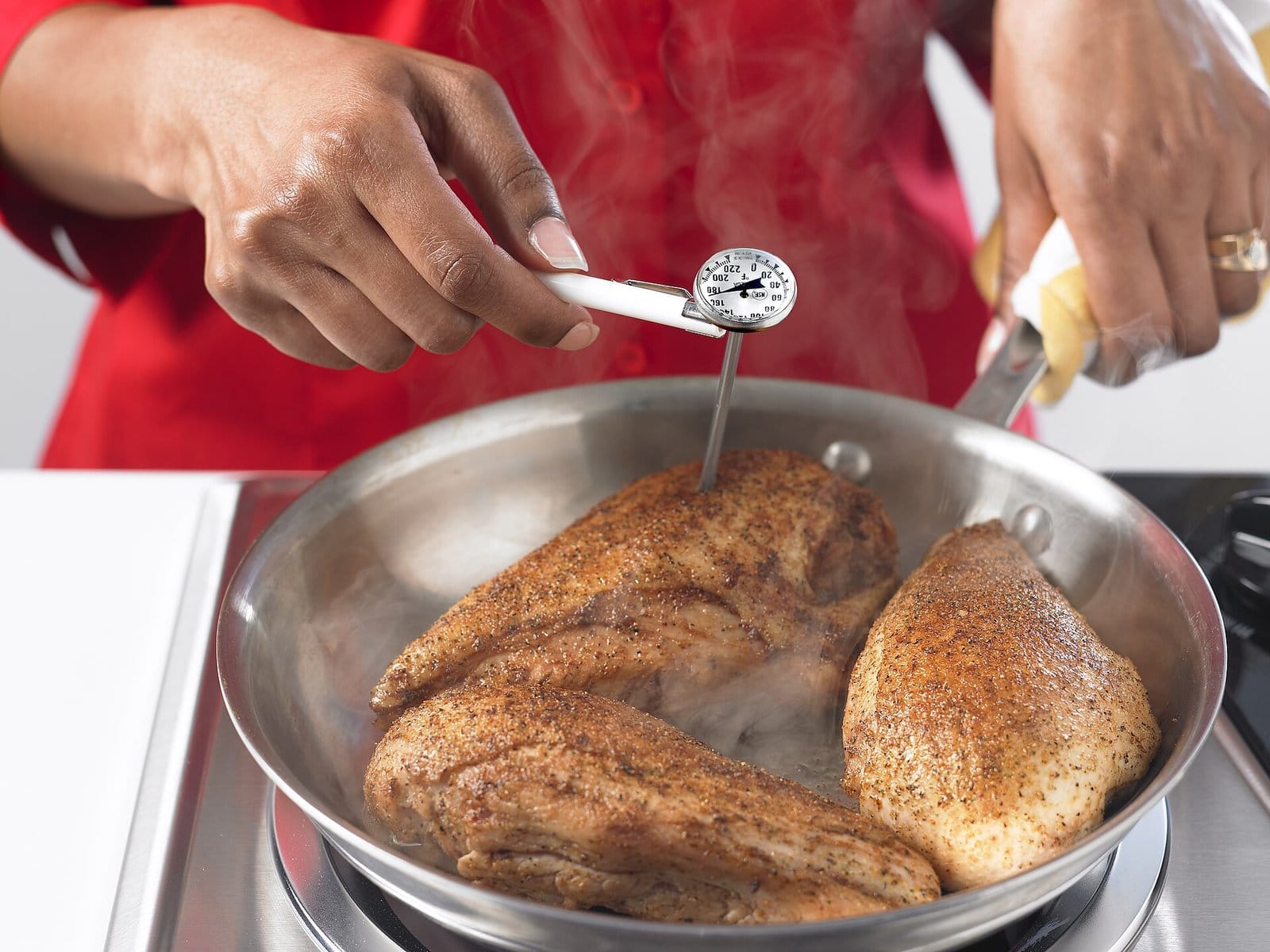
According to the USDA, a whole turkey is safe when cooked to a minimum internal temperature of 165 °F, measured with a food thermometer. Check the innermost part of the thigh and wing and the thickest part of the breast.
For turkey breasts, place the thermometer in the thickest part. Don't rely on color to determine doneness, since a golden-brown turkey is not necessarily fully cooked.
Once the turkey hits 165 °F in all three locations, the USDA suggests resting it for about 20 minutes before carving. That rest can help keep slices juicy.
Leftovers should be reheated to 165 °F before serving.
Wild Turkey or Store Turkey?
Wild turkey has a more pronounced flavor and a firmer bite than domestic turkey, but whether it tastes better comes down to personal preference.
Wild turkey asks for more attention to cook and is more likely to turn out dry. Store-bought turkey is generally easier and more forgiving.
Brine the breast and cook it gently. Braise the legs for hours.
Check the temperature every time.
Sources
- Turkey as food
- Is Wild Turkey Good Eating?
- Wild Turkey Meat: Nutrition Information, Cooking Techniques, and Handling
- Wild Turkey Recipes for Breasts, Legs, and Thighs
- Five Ways to Cook a Wild Turkey (NWTF)
- Turkey Leg Breakdown (Mossy Oak)
- Wild Turkey (NC State Extension)
- Turkey from Farm to Table (USDA FSIS)
- Is Your Turkey Done? Let the Thermometer Decide! (USDA FSIS)