Venison Bourguignon
If this isn't one of the best dishes you can make with venison, I don't know what is.
Being classically trained in French culinary arts, I often try to step outside my training and explore other cuisines, but some things with venison are best kept French—and this bourguignon is absolutely one of them.
Why This Dish Works So Well
From a high level, it appears complex and challenging with all those layers of flavoring and multiple stages.
But the reality? This is a one-pot dish and it's relatively easy to execute. What it lacks in complexity, it more than makes up for in flavor.
This comes down to two things: quality ingredients and proper cooking technique.
The Cut Makes All the Difference
You can use cubed shoulder or other trimmed meat for this, but I don't recommend it.
The reason I insist on shank for bourguignon is collagen.
As you know, venison has almost no intramuscular fat, so we rely heavily on connective tissue breaking down into collagen to build body in our sauce.
Without that gelatin-rich tissue slowly dissolving into the braising liquid, you'd end up with thin soup instead of the luxurious, coating sauce that defines a proper bourguignon.
The shank gives you exactly what you need: tough, sinewy meat surrounded by generous amounts of connective tissue that transforms into silky, lip-sticking goodness after hours of gentle braising.
Understanding Your Aromatics
The aromatics in this dish—onions, garlic, herbs—serve a specific purpose: they're there purely for flavoring the braising liquid.
This is why they're added whole or halved rather than diced. They're not meant to be served alongside the finished dish.
Their job is to infuse the sauce with depth and complexity, then step aside. You'll strain them out before plating, leaving behind only their essence.
The Alcohol: Where Quality Matters (and Where It Doesn't)
Now for the important part: the wine and brandy.
The brandy is straightforward—I use a good quality brandy. Yes, it's expensive, but it's absolutely noticeable in the finished dish.
This isn't the place to cut corners. You're not using much, and that hit of refined complexity it brings is worth every penny.
The wine doesn't have to be expensive, but it does need to be rather specific. Ideally, you'd use a Burgundy wine (it's called bourguignon for a reason), but any wine that is dry and low in tannins will work.
This is crucial: you want low phenolics because of venison's lack of fat. High-tannin wines paired with lean meat create an unpleasant metallic, astringent taste that no amount of cooking will fix.
The fat in beef bourguignon helps balance those tannins—venison doesn't give you that luxury.
Look for wines described as "smooth," "soft," or "fruit-forward" rather than "bold" or "structured."
A basic Pinot Noir, Côtes du Rhône, or even a light Merlot will serve you better than an expensive Cabernet Sauvignon in this application.
Venison Butchering Diagram
Download my complete venison cut diagram showing every primal cut and the best cooking methods for each—from tenderloin steaks to ground shoulder.
The Bottom Line
This dish looks impressive, tastes extraordinary, and is far more forgiving than it appears.
Master this technique, and you'll have one of the finest wild game recipes in your arsenal—one that honors both the French tradition and the unique qualities of venison.
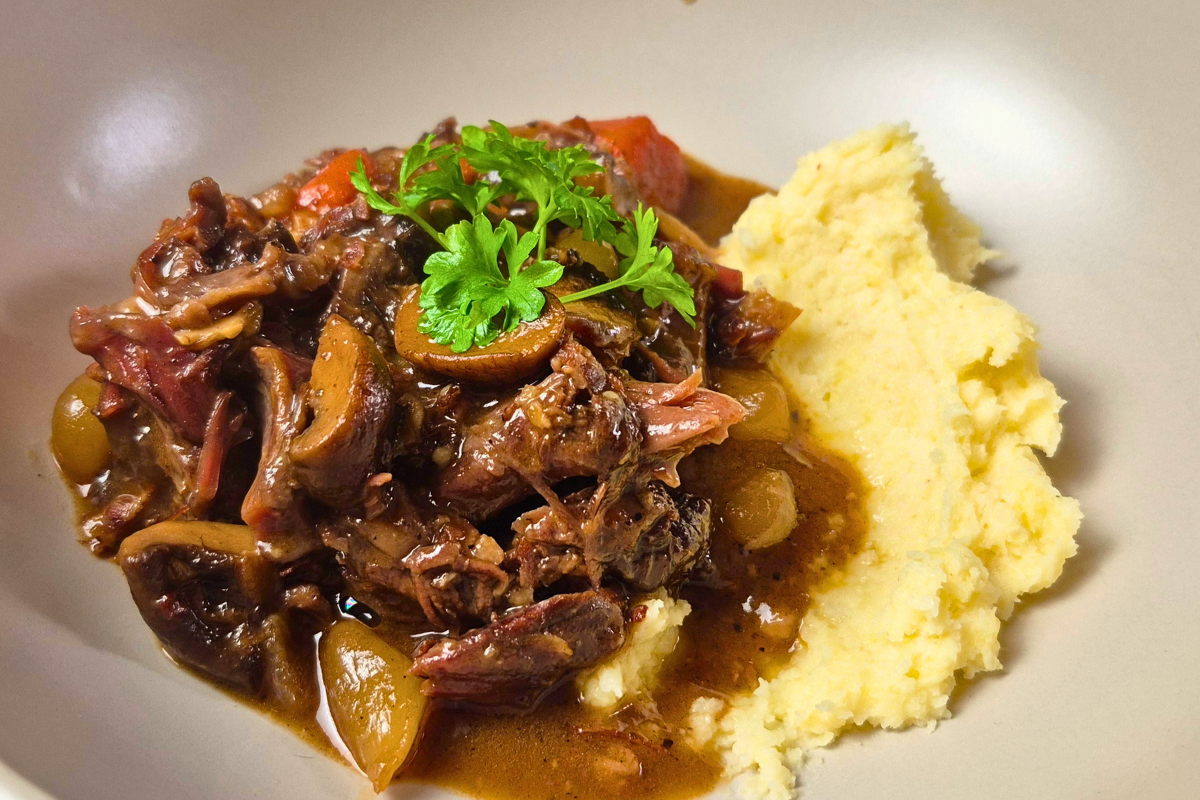
Venison Shank Bourguignon
Ingredients
- For the Shanks
- For the Aromatics & Vegetables
- For the Braising Liquid
- Herbs & Finishing
Method
- Preheat oven to 325°F. Heat high temp oil in a cast iron, stainless steel, or carbon steel pan over high heat. Season shanks generously with salt and pepper, then brown on all sides until deeply caramelized. Transfer to a Dutch oven.
- Reduce heat to medium and add bacon to the same pan. Cook until crispy and fat is rendered, then transfer bacon to the Dutch oven with a slotted spoon.
- Add clarified butter to the pan. Add carrots, onion halves, and garlic bulb (cut side down). Brown well, about 5-7 minutes, then transfer to the Dutch oven.
- Add cremini and porcini mushrooms to the pan along with pearl onions. Cook until mushrooms release their moisture and everything is golden brown, about 8-10 minutes. Remove and set aside.
- Add cognac to the pan and deglaze, scraping up all those browned bits. Add red wine and reduce by ¼ to ½ (about 10-15 minutes). Stir in tomato paste and Dijon mustard until incorporated.
- Sprinkle flour over all ingredients in the Dutch oven and toss to coat. Pour the wine mixture over everything. Add venison stock, thyme, and bay leaves. Liquid should come about ¾ up the shanks. Cover and place in oven for 1 hour.
- Remove from oven and stir in the reserved mushrooms and pearl onions. Return to oven and cook for another 1.5-2 hours until venison is fork-tender and falling off the bone.
- Remove from oven and stir in red wine vinegar. Let rest for 30 minutes (or overnight in the fridge for even better flavor development). Skim any fat from the surface before serving.
- Garnish with fresh parsley and serve over creamy mashed potatoes with plenty of the rich braising liquid.